Body Language Analyzer
Upload a photo and get a plain-language read on the posture, stance, and gestures it shows.
What the Body Language Analyzer does
A single frame from a video call, a negotiation, or a first date can carry a lot of unspoken signal, if you know where to look. This tool takes a photo of one or more people and walks through what the posture, arm and hand positions, stance, and facial expression suggest, the way a body language coach might narrate a clip in slow motion. It works from a details box too, so you can ask it to focus on one person in a group shot or compare two people facing off. The result reads like a short breakdown: open or closed posture, apparent confidence, and any signals worth double-checking against context, since a crossed arm can mean cold as easily as closed off.
See a sample result
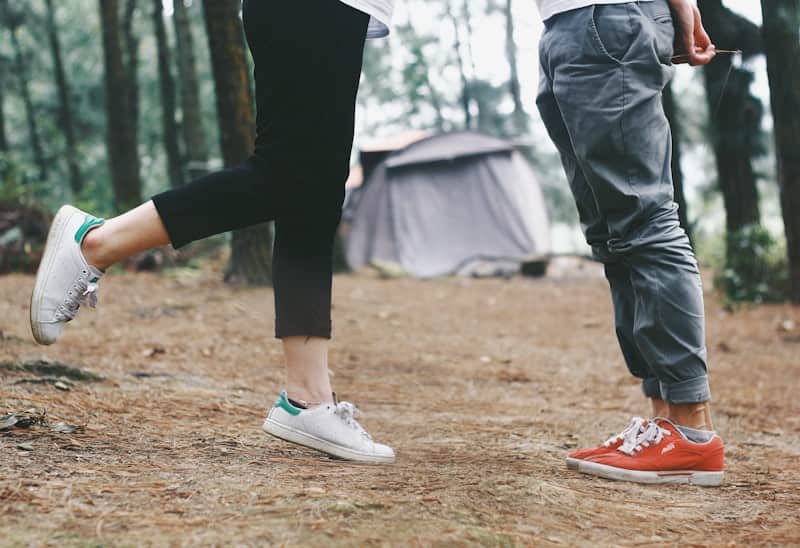
Input: A candid outdoor photo cropped to the waist down: two people facing each other on a pine-needle forest floor at a campsite, a tent behind them. The person on the left stands on the toes of one foot with the other leg lifted behind; the person on the right stands flat-footed, one hand at a pocket. No faces are visible.
- Openness80%
- Closeness85%
- Tension level10%
Because only the lower body is visible here, this reading focuses on stance and foot position rather than facial expression or eye contact.
The person on the left is up on the toes of one foot with the other leg lifted behind, a pose people often fall into mid-hug or mid-kiss when leaning up toward someone taller. The raised back leg reads as relaxed and playful, not braced. The person on the right stands flat-footed with weight even, feet pointed toward the other person, and one hand loosely at a pocket, which usually reads as comfortable and engaged rather than guarded.
Both sets of feet point at each other and the gap between them is small, both common signs of closeness. Nothing in the frame suggests tension: no wide defensive stance, no weight shifted away. The overall picture suggests an affectionate moment between people who know each other well, likely partners. Without the faces or upper bodies, treat the scores below as an estimate from posture alone.
How it works
- 1
Upload a clear, well-lit photo
Use a photo where the person's full stance is visible from at least the waist up, ideally the whole body. Side and three-quarter angles usually show more than a straight-on headshot.
- 2
The AI reads posture, gesture, and expression
It looks at stance width, shoulder and spine alignment, arm and hand placement, head tilt, eye contact, and facial expression, then weighs how those elements typically work together.
- 3
Add context in the details box
Mention what's happening in the photo (a job interview, a first meeting, a candid moment) or ask about one specific person if there are several in frame. Context changes how a pose should be read.
- 4
Get a written breakdown with scores
You get a short narrative on stance and gesture, plus 0 to 100 scores for things like openness and apparent confidence, so you can see the read at a glance before the detail underneath.
Use cases
Practice for interviews and presentations
Screenshot yourself from a recorded mock interview or webcam rehearsal and see how your stance and hand placement come across before the real thing.
Understand a photo from a negotiation or meeting
Run a still from a video call or meeting photo to get a second opinion on who looked open versus guarded, useful for coaching or debriefing after the fact.
Study acting or photography reference shots
Actors and photographers use it to check whether a posed shot actually reads as the emotion intended, since a pose that feels confident to hold can look stiff on camera.
Learn body language from everyday photos
Upload your own candid shots or stills from films and TV to build an intuition for what different stances typically signal.
Tips for better results
- Use photos where hands and arms are visible; a lot of the signal lives there, not just in the face.
- Crop out anyone you don't want analyzed, or name the person in the details box if a photo has more than one.
- Give context in the details box (a job interview, a first date, a casual hangout); the same crossed arms read differently depending on the setting.
- Full-body or waist-up shots give a more complete read than tight headshots.
- Treat the result as one interpretation, not a verdict; body language is shaped by culture, personality, and the moment, not a fixed code.
Limitations
This tool reads what's visible in a single still photo: posture, gesture, stance, and expression. It cannot read minds, detect lies, or confirm what someone was actually thinking or feeling, and it has no access to tone of voice, movement over time, or private context. A pose that looks closed off might just mean someone is cold, tired, or standing awkwardly for a photo. Cultural norms around gesture, distance, and eye contact vary widely, and the tool's read leans on Western-centric conventions unless you say otherwise in the details box. Use it for practice, curiosity, or a second opinion, not as evidence about a real person's intentions or state of mind.
Frequently asked questions
Can this tool tell if someone is lying?
No. It describes what a posture or gesture typically suggests, but body language alone is not a reliable lie detector, and this tool makes no claim about honesty or deception.
Does it work with photos of more than one person?
Yes, and it often compares stances between people in the same frame. If you want the focus on one person specifically, say so in the details box.
What if the person's face isn't visible in the photo?
It will still read stance, gesture, and movement, but the analysis will note that facial expression and eye contact couldn't be assessed, which lowers confidence in the mood-related parts of the read.
Can it analyze a screenshot from a video call?
Yes, a clear screenshot works well, though webcam angles often crop out the lower body, which limits what the tool can say about stance and weight distribution.
Why did it give a low confidence score for a pose that felt confident?
Scores reflect visual cues like stance width, shoulder position, and hand placement, not how the person actually felt. A tense pose can look confident on camera and vice versa.
Does culture affect the reading?
It should. Personal space, eye contact norms, and gesture meaning vary by culture, so mention the cultural context in the details box if it matters for your photo.
Plans start at $9 a month. See pricing