What Breed Is My Cat
Upload a photo of your cat and get an AI estimate of its likely breed, coat, and age range.
What the Cat Identifier does
Shelter cats rarely come with paperwork, and a coat pattern alone can leave you guessing whether you've got a domestic shorthair or something closer to a specific breed. Upload a photo and the AI estimates its likely breed or breed mix based on coat color and pattern, body type, ear and face shape, and eye color, then gives you a rough age range and any distinctive markings worth noting. It's for anyone curious about a new adoption, a stray that showed up on the porch, or just settling a debate about what their cat actually is.
See a sample result
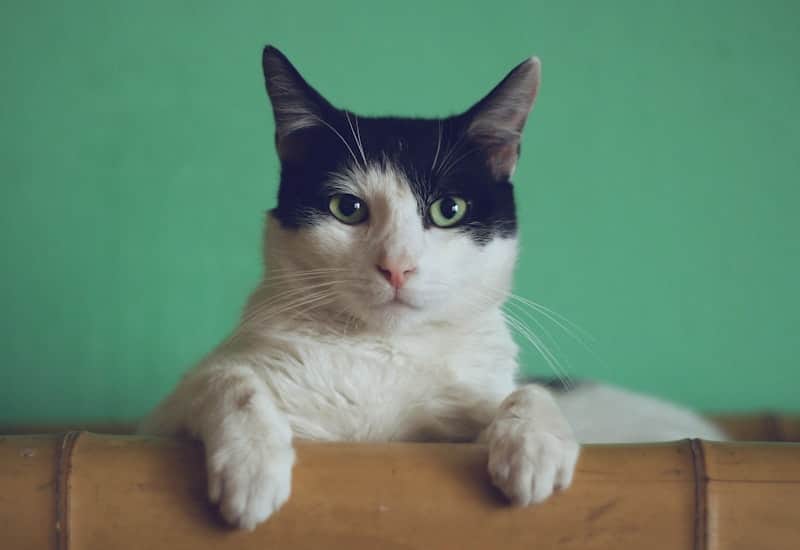
Input: A mostly white shorthaired cat with a black cap over the top of the head, ears and around the eyes, a white muzzle and chest, and yellow-green eyes. It rests both front paws on a bamboo pole in front of a soft green wall. The tail and back are out of frame.
- Domestic Shorthair (bicolor)78%
- Turkish Van12%
- American Shorthair10%
Breed: Most consistent with a domestic shorthair in a high-white bicolor pattern. Black-and-white coats like this turn up across mixed-breed cats and don't point to one pedigree.
Coat: Short, fine white coat with a solid black cap over the crown, ears and eye area, sometimes called a cap or mask pattern. The white nose and pink nose leather are typical of bicolors.
Face and ears: Moderately wedge-shaped face with large, upright ears, closer to an everyday domestic build than the round, cobby face of a British Shorthair.
Eyes: Yellow-green, common in domestic cats and not breed-specific.
Lookalike to know: The Turkish Van also has a white body with color mainly on the head, but it usually has a colored tail and a semi-long coat. The tail isn't visible here and this coat looks short, so a Van is unlikely.
Estimated age: Adult, based on face maturity. An exact age isn't possible from a photo.
Notes: Without papers or a DNA test, domestic shorthair is the most honest label for a cat like this.
How it works
- 1
Upload a clear, well-lit photo of your cat
A shot showing the face and as much of the body as possible works best. Good lighting helps the AI read coat pattern and eye color accurately.
- 2
The AI reads coat, body type, and facial structure
It looks at coat length, color pattern, ear shape, face shape, body build, and eye color, the same visual cues used to distinguish breeds by eye.
- 3
Add a note in the details box if you have background
Mention if you know your cat's age, where you got them, or any breed guess a vet gave you, and the estimate will factor that in.
- 4
Get a breed estimate with a probability breakdown
You get a written description of coat and features, a rough age range, and scores showing how likely each breed candidate is based on what's visible in the photo.
Use cases
New shelter or rescue adoptions
Get a rough sense of what breed traits your new cat carries when the shelter listed them simply as 'domestic shorthair mix' with no further detail.
A stray or foster cat with no history
Estimate likely breed and age when you've taken in a cat with no paperwork, as a starting point before a vet visit.
Settling a family debate
Get a written breakdown of coat pattern and body type to settle an argument about whether the family cat 'looks like' a specific breed.
Comparing littermates
Run photos of kittens from the same litter to see how differently the AI reads their individual coat patterns and likely breed mix.
Tips for better results
- Photograph your cat's whole face and as much of the body as you can in one frame; a close crop on just the eyes limits what the AI can assess.
- Use natural light or bright indoor light so coat color and eye color read accurately instead of washed out or shadowed.
- Each run reads one photo, so if the face shot hides the body or tail, run a second full-body photo and compare the two reads.
- Mention any known history (shelter records, a vet's guess, a parent's breed) in the details box for a more grounded estimate.
- Treat a confident-looking purebred result with some skepticism; most cats with distinctive coats are still mixed breed.
Limitations
This is a visual estimate based on coat pattern, body type, and facial structure, not a genetic test. Appearance alone can't confirm breed ancestry, since many mixed-breed cats share the same coat patterns and features as recognized breeds. Age estimates are approximate and can shift with lighting, coat condition, and the cat's pose. For a confirmed breed or health concern, a veterinarian or a cat DNA test is the reliable option; treat this tool as a fun starting point, not a diagnosis.
Frequently asked questions
Can this tell me for sure if my cat is a purebred?
No, it's a visual estimate, not a genetic test. Many mixed-breed cats share coat patterns and features with recognized breeds, so a confident-sounding result still isn't proof of pedigree.
How accurate is a photo-based cat breed guess?
It depends heavily on photo quality and how distinctive the cat's features are. Cats with common coat patterns, like the black-and-white bicolor in the example, are harder to pin to one breed than cats with unusual, breed-specific traits.
What if the result says my cat is a mix of several breeds?
That's common and often accurate in spirit, since most cats without documented pedigrees are mixed. The scores reflect which breed traits are most visually present, not a certified genetic breakdown.
Does it estimate my cat's age too?
Yes, it gives a rough age range based on facial maturity and body proportions, but this is approximate and can vary with lighting, coat condition, and the individual cat.
Can it identify kittens as well as adult cats?
It can attempt a read on kittens, but breed-distinguishing features like face shape and body build are less developed at a young age, so results tend to be less specific.
Should I use this instead of a vet or a DNA test?
No. Use it for curiosity or a starting point, but a veterinarian's exam or a cat DNA test is the reliable way to confirm breed background or address a health concern.
Plans start at $9 a month. See pricing