What the Old Money Aesthetic Generator does
Old money style avoids logos and loud branding on purpose, favoring tailored fabric, muted color, and settings that look lived-in rather than styled for the camera, a country estate, a wood-paneled study, worn leather furniture. This tool takes a photo and restyles it into that world: refined clothing, soft natural light, and the kind of quiet, expensive-looking environment the aesthetic is known for. It's built for anyone chasing the trend for social media, a moodboard for a personal style shift, or just curious what they'd look like dressed for old money rather than new money. Upload a photo and get back a version reworked into that world, with the fashion and setting doing the work instead of a single filter laid over the top.
See a sample result
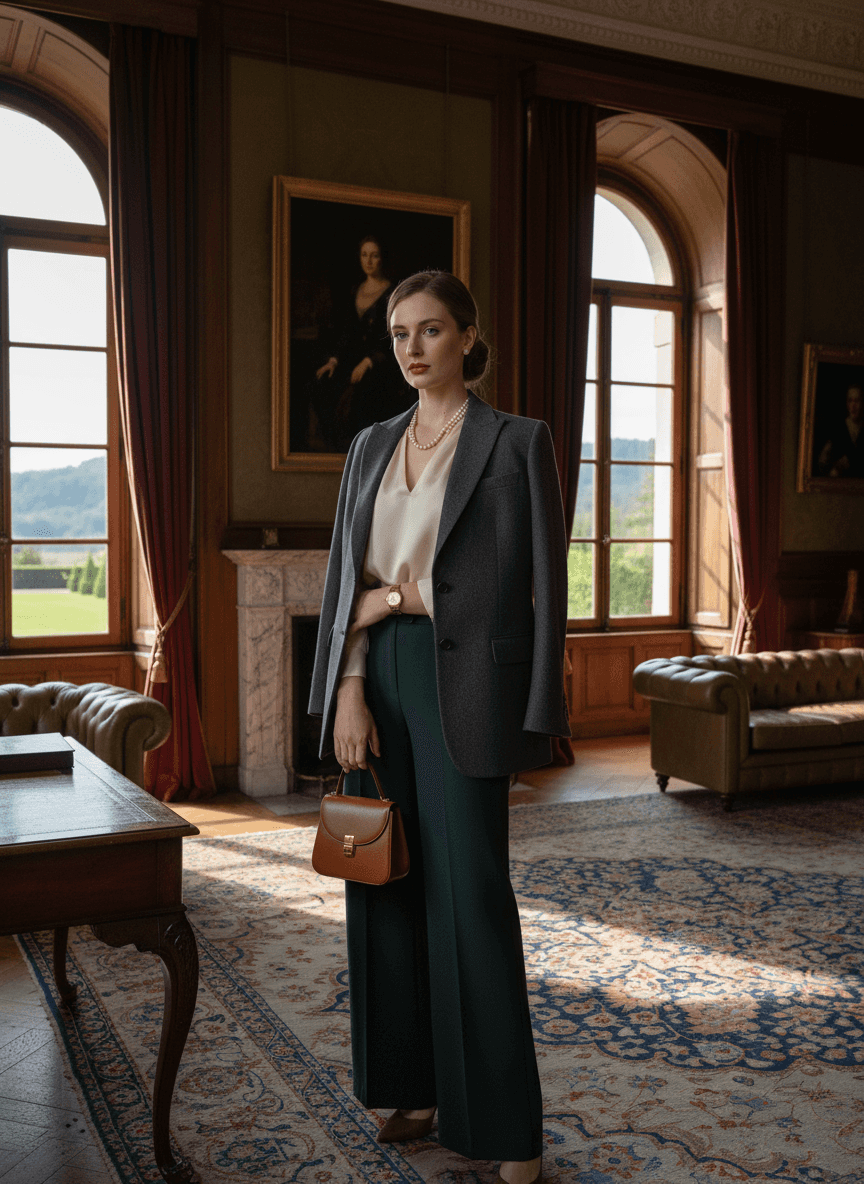
Input: A full-length phone photo of a woman with her hair in a low bun, wearing a white t-shirt, black jeans, and sneakers, standing in a bright modern apartment. The result looks similar to the image at the top of this page.
Wardrobe
The outfit was rebuilt into a structured gray wool blazer over a cream silk blouse and tailored dark green trousers, with a simple necklace, a watch, and a small cognac leather handbag in place of the sneakers-and-jeans look.
Setting
The background became a wood-paneled drawing room with tall arched windows, heavy curtains, a portrait painting on the wall, and worn leather furniture, the kind of interior meant to look inherited rather than decorated for a photo.
Light and mood
Soft, warm daylight comes in through the windows, giving the whole scene a muted, slightly faded quality rather than sharp studio lighting. The overall effect reads as composed and understated rather than dressed up, the core idea behind the old money look.
How it works
- 1
Upload a clear, well-lit photo
A portrait or a full-body shot both work. Simple poses and plain backgrounds give the styling more room to rework clothing and setting convincingly.
- 2
The AI restyles clothing and color
It swaps in tailored, classic pieces, blazers, wool trousers, soft knits, in a muted, neutral palette, moving away from bright color or visible logos.
- 3
The setting shifts to match
Backgrounds are reworked toward the estate-and-heirloom look the aesthetic is known for: paneled rooms, tall windows, leather furniture, and soft daylight rather than a studio backdrop.
- 4
Download the finished photo
You get back an image styled for the old money look, ready to post, save to a moodboard, or compare against a few other outfit and setting variations.
Use cases
Social media aesthetic content
Creators posting old money and quiet luxury content use the generator to try the look on themselves before planning an actual photoshoot or wardrobe purchase.
A moodboard for a style shift
See what your own outfits and settings could look like reworked into a tailored, muted palette before buying new clothes or redecorating a space.
Profile and cover photos with a specific mood
A styled, understated photo can work well as a profile picture or cover image for someone building a particular personal brand.
Just trying the trend for fun
Plenty of people run a photo through simply to see themselves in the aesthetic without any specific plan for the result.
Comparing a few looks before an event
If you're deciding between outfit directions for a shoot or an event with a dress code, running a couple of source photos through can help narrow down a direction before you buy or borrow anything.
Tips for better results
- Use a photo with simple, uncluttered clothing so the wardrobe restyling has a clean base to work from.
- Front-facing or three-quarter poses tend to give the clearest read on how the new outfit and setting come together.
- Avoid photos where your original outfit has large logos or busy patterns, since these can sometimes carry through into the result.
- Try both a close portrait and a full-body shot, since the setting and outfit details come through differently at each crop.
- If the result feels too dark or too staged, a source photo with softer, more natural lighting usually restyles more convincingly.
- Name a setting in the instruction if the default drawing room isn't your thing: a country garden, a library, a tennis club, or a ski lodge.
Frequently asked questions
What does old money aesthetic actually mean?
It refers to a style associated with inherited wealth rather than newly earned money: tailored, understated clothing, muted color, minimal branding, and settings that look established rather than newly decorated.
Will it change my face or body?
It aims to change only clothing, color, and setting, but the whole photo is regenerated, so your face, hair, and build can shift somewhat. If the result stops looking like you, rerun it with a clearer, front-facing photo.
Can I use this for a specific outfit idea, like a blazer look?
Yes. Edit the instruction to describe it, for example 'navy double-breasted blazer, cream trousers, loafers, on a sailing club terrace'. Left as is, the generator picks its own old money outfit and setting.
Does it work with photos taken indoors and outdoors?
Yes, both work. Outdoor photos tend to shift toward estate grounds or countryside settings, while indoor photos lean toward the paneled-room look.
Is this based on real old money fashion?
It draws on the visual cues commonly associated with the trend online, tailored fabric, muted tones, heritage-style settings, rather than a strict historical or sociological definition.
Can I generate more than one version to compare?
Yes. Each run uses credits, and changing the outfit or setting in the instruction between runs gives you a wider range than rerunning the default.
Plans start at $9 a month. See pricing