Cultural Element Analyzer
Upload a photo of a garment, ceremony, or pattern and get context on the cultural symbols behind it.
What the Cultural Element Analyzer does
A market stall sells a woven textile with a pattern you don't recognize, or a friend's wedding photos show a headdress, offering, or ritual object you'd like to understand before you ask. Point a photo at this tool and it reads the visible details, colors, motifs, and arrangement of objects, then explains what tradition they likely belong to and what they typically mean. You get named symbols, the region or practice they're associated with, and historical background where it applies, written the way a museum placard would put it: informative, not a guess dressed up as certainty. It's built to add context, not to label people, so results focus on the objects and patterns in front of the camera.
See a sample result
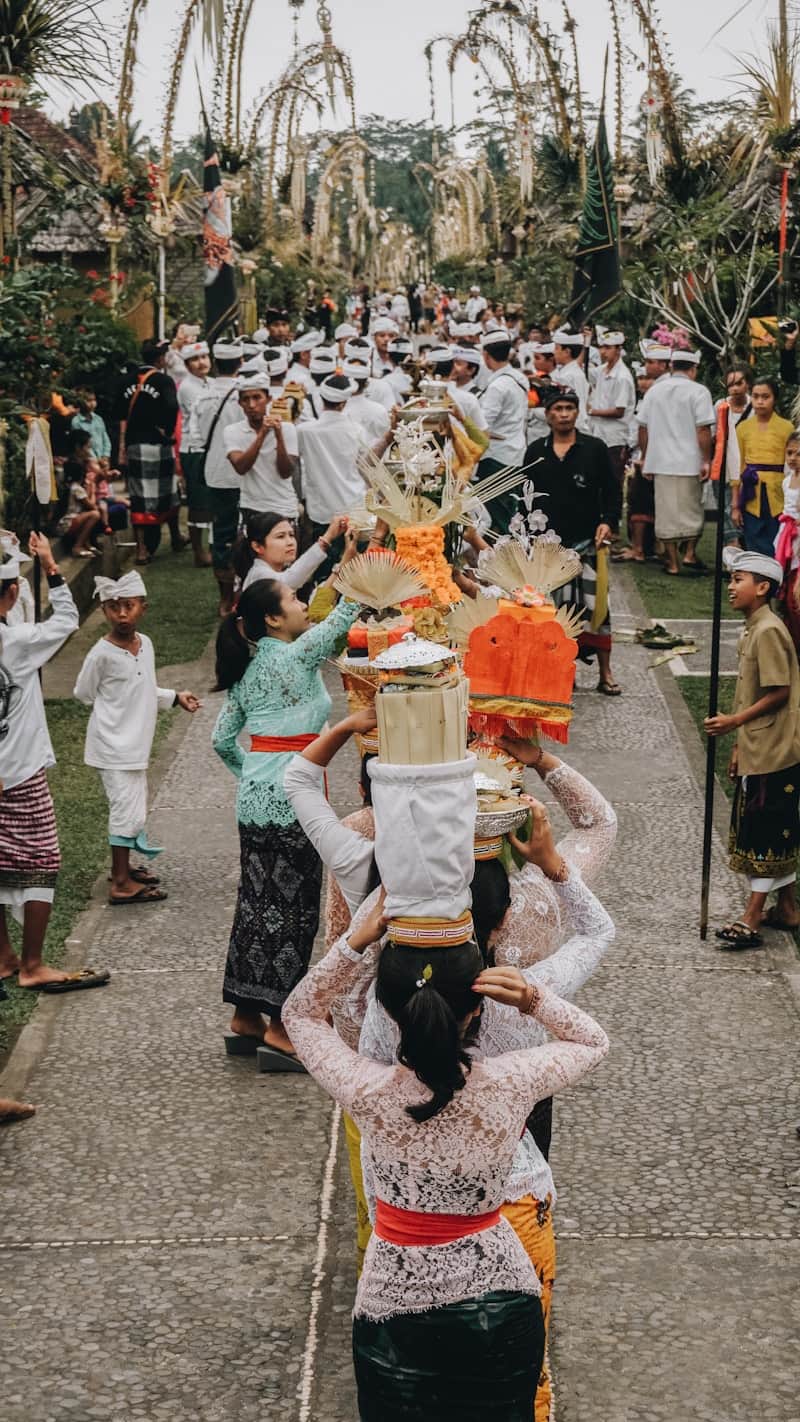
Input: An overhead photo taken from behind a line of people walking down a stone path during an outdoor procession. Women in white lace blouses and sashes carry tall, tiered offerings, woven from palm leaf and topped with fruit and flowers, balanced on their heads. Men and boys wear white shirts with cloth headwraps tied in a peak at the front. Tall bamboo poles arch overhead, hung with woven palm-leaf decorations, and dark ceremonial banners line the path among palm trees and thatched-roof buildings.
- Balinese Hindu ceremony80%
- Other Indonesian religious procession14%
- Southeast Asian harvest festival6%
Likely tradition: A Balinese Hindu temple ceremony (odalan or a related offering procession), based on the tiered fruit-and-flower offerings, the bamboo pole decorations, and the white ceremonial dress.
Key elements identified:
- The tall stacked offerings (gebogan) carried on the head are a traditional way of bringing fruit, flowers, and cakes to a temple as a gift of gratitude; the height and craftsmanship often reflect the community's effort for the occasion.
- The arched bamboo poles decorated with woven palm leaf (penjor) are raised for temple festivals and mark the ceremonial path leading to the temple.
- White clothing, including the men's cloth headwraps (udeng), is common ceremonial dress in Balinese Hinduism, chosen for its association with purity during religious observance.
- The dark banners and umbrellas along the path typically mark a sacred route or the boundary of ceremonial ground.
Cultural context: Temple ceremonies like this one recur on a ritual calendar tied to the Balinese pawukon cycle rather than the standard calendar year, so a temple's odalan happens roughly every 210 days. Community members prepare offerings together in the days before.
Not visible or confirmable: The specific temple, village, or exact ceremony name can't be confirmed from a photo alone; regional practices vary across Bali.
How it works
- 1
Upload a clear photo of the object, garment, or scene
Get close enough that patterns, colors, and any text or emblems are visible. Ceremonies and group scenes work too, since context helps identify what's happening.
- 2
The AI reads symbols, motifs, and arrangement
It looks at color combinations, repeated patterns, materials, clothing cuts, and any ritual objects or gestures visible in the frame.
- 3
Add what you already know in the details box
Mention a country, region, or occasion if you have one, and the analysis will narrow its read and address your specific question.
- 4
Get a breakdown of what the elements likely represent
The result names the probable tradition, explains individual symbols and their meanings, and notes historical or regional origin where the image supports it.
Use cases
Understanding a photo from travel or a friend's event
You photographed a ceremony, market, or festival abroad and want to know what the objects, clothing, or gestures actually represent before sharing or asking questions.
Researching a textile, mask, or heirloom
A pattern on an inherited textile or a carved object doesn't come with a note explaining its origin, and you want a starting point before digging further.
Preparing for a cultural event respectfully
You're attending a wedding, festival, or ceremony from a tradition you're not familiar with and want to understand what you'll see and why it matters.
Teaching or coursework
Students and educators use photos of art, dress, or ritual objects to check their own reading of a symbol or motif against the tool's analysis.
Vetting decor or costume choices
Before using a pattern, symbol, or garment style in a design, costume, or event, you want to know its origin and whether it carries specific religious or ceremonial meaning.
Tips for better results
- Get close enough that patterns and small details like embroidery or carved motifs are actually legible in the photo.
- Include the full garment or object rather than a tight crop; surrounding context often carries meaning too.
- Name the country or region in the details box if you know it, since many motifs are shared or adapted across neighboring cultures.
- Photograph ceremonial objects in natural light, since shadows can hide fine patterning that carries the analysis.
- Treat the result as an entry point for learning, and follow up with sources from the specific community when it matters to you.
Limitations
This is a visual read based on symbols and patterns the AI recognizes, not a cultural authority or a substitute for asking someone from the tradition directly. Many motifs are shared, adapted, or reinterpreted across regions and generations, so a close match isn't always the exact origin. It describes objects and traditions visible in the photo; it does not identify or make claims about the ethnicity or background of any person shown.
Frequently asked questions
Will it identify the ethnicity or background of people in the photo?
No. It focuses on visible objects, clothing, and symbols, and describes the tradition or practice they belong to rather than making claims about individual people.
Can it identify the exact region or village a tradition comes from?
It can usually name the broader culture or tradition and the general region, but a specific village or lineage isn't something a photo alone can confirm.
What kinds of photos work best?
Clear, well-lit shots of textiles, clothing, ceremonial objects, festivals, or artwork where the patterns and symbols are visible work best.
Is the analysis accurate for every culture?
Coverage is broader for widely documented traditions. Less commonly photographed or documented practices may get a more general or tentative read.
Can I ask about a specific symbol instead of the whole scene?
Yes. Crop to the symbol or motif you're curious about and mention your question in the details box for a more focused answer.
Will it tell me if something is being used disrespectfully?
It can note when an element is typically reserved for specific ceremonies or roles, which can help you judge appropriate use, but it isn't a formal ruling on cultural etiquette.
Plans start at $9 a month. See pricing