Coin Identifier
Photograph a coin and get its likely country, denomination, year, and background.
What the Coin Identifier does
A coin found in a drawer, dug out of a garden, or handed down from a relative rarely comes with an explanation. This tool reads a photo of a coin or piece of paper currency and works out its likely country or issuer, denomination, approximate year, and metal composition, along with any visible mint marks or design details worth noting. It's built for anyone sorting through a jar of change, a family collection, or a flea market find and wanting a starting point before digging deeper. The result explains its reasoning and gives probabilities across a few likely matches, since coin identification from a photo alone isn't always a single clean answer.
See a sample result
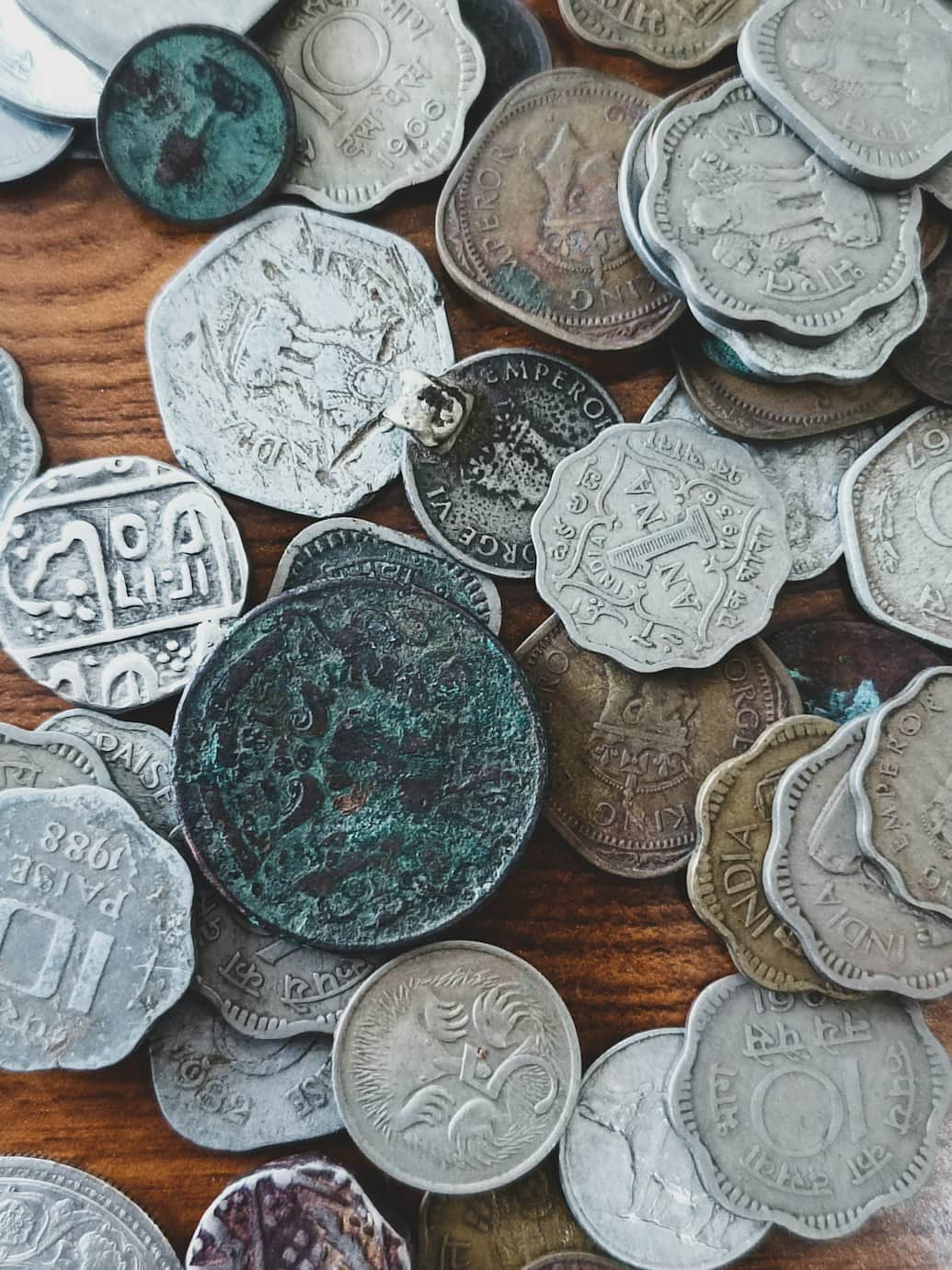
Input: A close-up photo of a pile of worn coins on a wooden table, mostly Indian coinage of different eras: a green, corroded copper coin, several scalloped and square-cornered coins reading INDIA and KING EMPEROR, and a 10 paise coin dated 1988.
- British India Anna (copper-nickel)55%
- Copper paisa, pre-independence25%
- Modern Indian rupee/paisa20%
Most likely identification: Mixed lot of Indian coinage spanning British India and post-independence issues. The scalloped coins reading "KING EMPEROR" are pre-1947 British India pieces, most likely 1 anna coins, with a square-cornered 2 anna mixed in.
Denomination and metal: The scalloped pieces look like cupro-nickel or nickel-brass annas from the 1930s to 1940s; the metal is a visual guess, since color changes with wear. The dark, heavily corroded round coin appears to be an older copper paisa, likely 19th or early 20th century, though the corrosion makes an exact date hard to confirm. The coin marked "10 PAISE 1988" is a Republic of India issue, most likely the stainless steel type of that period.
Condition notes: Most pieces show heavy circulation wear and surface corrosion typical of coins that sat in soil or damp storage, which affects both readability and any collector value.
Historical context: British India annas were issued under colonial administration before India's 1947 independence, after which the currency system shifted to the modern rupee and paisa denominations seen in the newer coins here.
Rough value note: Common-date British India annas in worn condition typically carry modest collector interest, often under a couple of dollars each, though scarcer dates or pieces in much better condition can be worth more. Check a current price guide or dealer before selling.
How it works
- 1
Photograph the coin clearly
Lay the coin flat under even light and photograph both sides if you can. Fill the frame with the coin rather than shooting it from a distance.
- 2
The AI reads design and text
It looks at visible text, symbols, portraits, and the coin's shape and edge style to narrow down the country or issuing authority and rough era.
- 3
It estimates denomination and date
Where a date or numeral is legible, it reads it directly. Where it's worn away, the tool estimates a likely range based on design style and wear.
- 4
You get identification plus context
The result names the most likely match with a probability, notes the metal and any mint marks, and adds historical context about the coin's period or significance.
Use cases
Sorting an inherited coin collection
A jar or box of coins passed down from a relative can be photographed piece by piece to get a quick sense of what's actually there before deciding what to do with it.
Checking a coin found by chance
Coins turned up while gardening, cleaning out a house, or metal detecting can be identified without needing to visit a coin shop first.
Identifying foreign currency after travel
Leftover coins from a trip abroad, often unlabeled and unfamiliar, can be matched to their country and denomination before you decide to keep, exchange, or spend them.
A first pass before an in-person appraisal
Getting a rough identification and value range first helps you decide whether a coin is worth the time and cost of a professional numismatist's opinion.
Tips for better results
- Photograph both the front and back of the coin separately for a more complete identification.
- Use even, diffused light and avoid direct flash, which can wash out fine details like mint marks and worn dates.
- Include a size reference, like a ruler or a common object, if the coin's exact diameter matters for identification.
- Clean coins gently if at all; aggressive cleaning can remove patina that actually helps confirm age and can lower value to collectors.
- For coins with illegible dates, type any partial text, weight, or diameter you can make out into the details box, since even fragments help narrow the estimate.
Limitations
This tool gives an identification and value estimate based on visual features alone, not a professional appraisal, and it can't authenticate a coin, detect a counterfeit, or grade condition to the standard a certified numismatist would use. Value estimates are rough, general ranges rather than firm prices; a coin's actual worth depends on precise grading, current market demand, and details a photo alone can't fully capture, such as fine surface wear or subtle strike variations. For anything you're planning to sell, insure, or that seems potentially rare or valuable, get an opinion from a professional coin dealer or a grading service before acting on this result.
Frequently asked questions
Can this tell me exactly how much my coin is worth?
It gives a rough value range based on what's visible in the photo, not a firm appraisal. Actual value depends on precise grading and current market conditions that a professional would assess in hand.
Can it identify counterfeit or fake coins?
No, it isn't built to detect counterfeits. If a coin's authenticity matters, especially for anything valuable, have it checked by a professional dealer or authentication service.
Does it work on paper currency too?
Yes, it can identify banknotes as well, reading denomination, country, and series details, though the same limits on precise value estimation still apply.
Why couldn't it read the date on my coin?
Heavy wear, corrosion, or poor lighting in the photo can make dates and mint marks illegible. Try photographing again in better light or from a slightly different angle.
What if the coin is very old or unusual?
The tool will give its best estimate based on design style and visible text, but very old, damaged, or rare coins are exactly the cases where a professional numismatist's opinion matters most.
Should I clean a coin before photographing it?
Generally no. Cleaning can remove natural patina that helps confirm age and can actually reduce a coin's value to collectors, so photograph it as found first.
Plans start at $9 a month. See pricing