Food Identifier
Upload a photo of any dish and get a plain-language read on what it is and how it was made.
What the Food Identifier does
You're staring at a plate someone handed you, or a photo from a trip, and you genuinely don't know what's on it. That's what this tool is for. Upload a photo and it names the visible dishes, guesses the cuisine, and points out the cooking method: fried, grilled, braised, whatever the surface texture and color suggest. It also gives a rough nutrition read, calling out where the protein, carbs, and fat are likely sitting based on what's visible. Home cooks use it to reverse-engineer a restaurant dish, travelers use it on street food they can't name, and people building a food log use it to fill in the blanks. You get back a written breakdown plus a set of scores, not a lab result. It's a fast way to put a name to a plate.
See a sample result
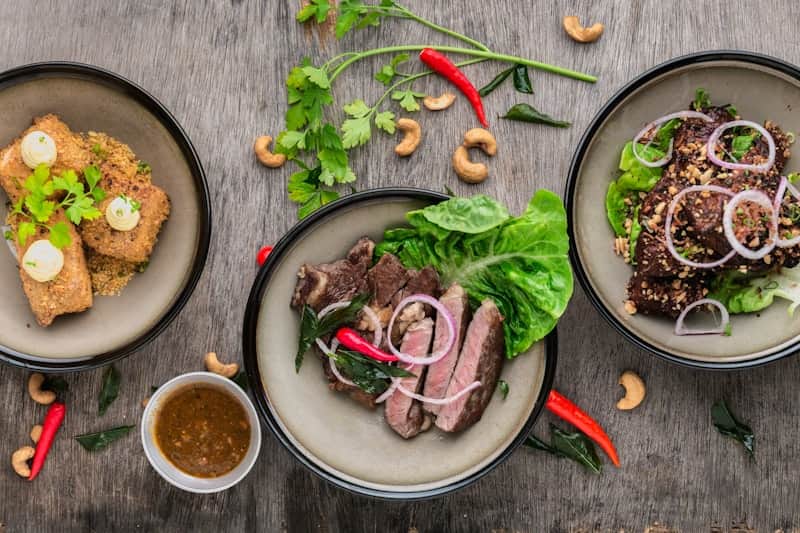
Input: An overhead photo of three shared bowls on a gray wooden table. Left: golden, crumb-coated fried pieces topped with small white rounds and sprigs of microgreens. Center: a sliced medium-rare grilled steak with raw red onion rings, red chili, dark green herb leaves and a head of butter lettuce. Right: dark, glossy chunks of meat tossed with red onion rings and a sprinkle of toasted seeds, over lettuce. Cashews, whole red chilies, a cilantro sprig and a small bowl of brown, chili-flecked dipping sauce sit around them.
- Protein content82%
- Vegetable freshness71%
- Fried or fatty55%
- Spice level68%
What's on the table
Three sharing plates with a clear Thai or Lao lean, going by the chilies, herbs, cashews and the dipping sauce.
- Center: grilled beef with a dipping sauce. Sliced steak served pink, with lettuce, onion and chili, next to a brown, chili-speckled sauce, looks like suea rong hai ("crying tiger" beef) with jaew, a tamarind, fish sauce and toasted chili dip.
- Right: a dark, glossy meat salad. Chunks of seared meat tossed with onion and toasted seeds or rice powder over lettuce reads as a nam tok or larb-style grilled meat salad. The meat could be beef or pork; the photo can't settle it.
- Left: crumbed, deep-fried pieces. The coating and color say fried, but the dish is the least certain of the three. The white rounds on top could be quail eggs or small mozzarella balls, which would point to a fusion starter rather than a classic Thai plate.
Cooking methods spotted: deep-frying on the left, direct grilling in the center, and searing plus a fresh toss on the right.
Rough nutrition read: protein-heavy overall. The fried plate is the richest; the two beef plates lean lighter thanks to the lettuce and herbs. The cashews and any sugar in the sauce add calories you can't see.
How it works
- 1
Upload a clear photo of the plate
Shoot from above or a slight angle, with the whole plate in frame. Natural light helps the AI read sauce color and browning accurately, which matters for cooking-method guesses.
- 2
The AI reads ingredients and technique
It looks at shape, char marks, sauce viscosity, garnish, and plating style to identify individual components, then infers the cuisine and how each item was likely cooked.
- 3
Add notes if something's unclear
Use the details box to flag a sauce you can't place or ask whether a garnish looks like a specific herb. The AI folds your note into the read instead of guessing blind.
- 4
Get a written breakdown with scores
You get a dish-by-dish description, a cuisine call, and scores estimating things like protein content and how fried or fresh the plate leans, based purely on what the photo shows.
Use cases
Naming a restaurant dish you can't ask about
Menu was in another language, or the server didn't have time to explain. Snap the plate and get a working name for what you're eating.
Reverse-engineering a recipe
You had something great and want to recreate it. The breakdown of visible ingredients and cooking method gives you a starting point before you search for a recipe.
Logging meals without guessing
Instead of estimating from memory, upload the photo right after you eat and use the identification and rough nutrition read to fill in a food log more accurately.
Curious travelers and street food
Street stalls rarely have menus you can read. This gives you a name and cuisine to search for later, so you're not just calling everything 'the noodle thing.'
Settling a table debate
Someone insists the sauce is peanut, someone else says tamarind. Upload the photo and let the AI weigh in with what it actually sees.
Tips for better results
- Shoot from directly above when you can; it shows portion layout and garnish more clearly than an angled shot.
- Use natural or bright kitchen light. Dim restaurant lighting can wash out sauce color, which throws off the cuisine guess.
- Get the whole plate in frame, including any side sauces or garnishes in small bowls.
- If you know one ingredient for certain, mention it in the details box so the AI builds around a confirmed fact.
- Avoid heavy photo filters. Warm or cool color casts can make a dish look more or less cooked than it is.
Limitations
This is a visual read, not a lab test or a nutrition label. The AI can't see what's under a sauce, inside a filling, or mixed into a batter, and it has no way to know your actual portion size, oil quantity, or hidden ingredients like added sugar or salt. Two similar-looking dishes from different cuisines can get mixed up, especially with fusion food or home-style plating that doesn't match a textbook example. Treat the nutrition read as a rough estimate for curiosity or a starting point for a food log, not medical or dietary advice. If you're managing a health condition or allergy, check ingredients directly or ask a professional rather than relying on a photo guess.
Frequently asked questions
Can it identify food from any cuisine?
It does reasonably well with common cuisines it has seen a lot of examples of, like Thai, Italian, Mexican, or American home cooking. Very regional or home-style dishes with unusual presentation are harder to place exactly.
Will it tell me exact calories?
No. It gives a rough nutrition read based on what's visible, not a precise calorie count. Portion size, hidden oil, and ingredients under a sauce all affect real calories in ways a photo can't show.
What if it misidentifies an ingredient?
Use the details box to correct it or add context, like naming a sauce you already know. A blurry or dim photo is the most common reason for a wrong guess, so a clearer shot usually helps too.
Can I use it for food allergy checks?
Don't rely on it for that. It can flag ingredients it visually recognizes, but it can't see hidden allergens like nuts ground into a sauce or gluten in a coating. Always confirm allergens directly with whoever made the food.
Does it work on packaged or plated grocery food?
Yes, though it's built for identifying prepared dishes rather than reading nutrition labels. For packaged food, a clear label photo will get you more accurate information than a photo of the food itself.
Why did it get the cuisine wrong?
Fusion dishes, home-style cooking, and unusual plating can all point the AI toward the wrong regional cuisine. Sharing the cooking context in the details box, like 'homemade, no specific cuisine,' can improve the read.
Plans start at $9 a month. See pricing