What the Translate Image does
Translate image is built for the moment a menu, sign, label, or handwritten note is in a language you don't read. Upload a photo and it pulls out the visible text, figures out the source language, and translates it into common languages while keeping the meaning intact rather than producing a word-for-word mess. It's useful for travel, studying a foreign document, or figuring out what's actually printed on packaging you bought abroad. The result also flags proper nouns, technical terms, and anything that couldn't be translated cleanly, like a logo or stylized text.
See a sample result
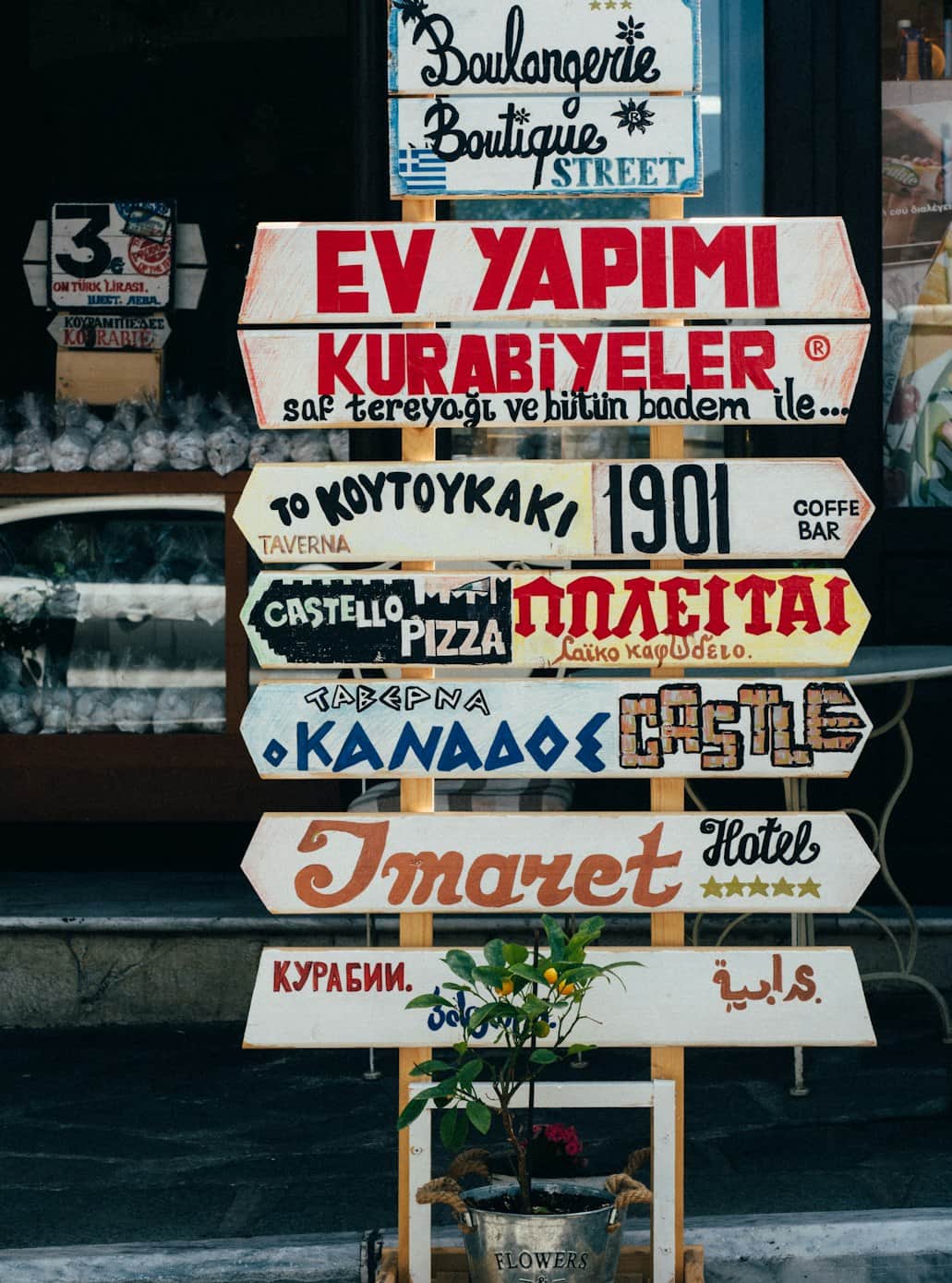
Input: A tall wooden signpost outside a shop window with hand-painted boards in several scripts: French ("Boulangerie, Boutique"), Turkish, Greek, Cyrillic, and Arabic, plus English words like "Coffee Bar", "Pizza", "Castle", and "Hotel".
Source languages
At least five: Turkish, Greek, Russian or Bulgarian (Cyrillic), Arabic, and French, with English mixed in. The Greek boards and the hotel name suggest a tourist street in northern Greece.
Translations
- "EV YAPIMI KURABIYELER" (Turkish): "Homemade cookies". Small line: "saf tereyağı ve bütün badem ile", meaning "with pure butter and whole almonds".
- "ΤΟ ΚΟΥΤΟΥΚΑΚΙ" (Greek, transliterated To Koutoukaki): roughly "the little tavern", a name for a small, casual taverna. "1901" is likely a founding year.
- "КУРАБИИ" (Cyrillic): "kurabiye cookies", the same product advertised for Russian or Bulgarian speakers.
- "Boulangerie" (French): "Bakery".
Proper nouns and unclear parts
"Imaret" is a hotel name and stays as is. The Arabic board and one stylized Greek board are too small and decorative to read reliably, so they're flagged instead of guessed.
Context note
The same cookie is advertised in three languages, which is typical of shops catering to visitors from Turkey and the Balkans.
How it works
- 1
Upload a photo containing the text
Street signs, menus, product labels, screenshots, or handwritten notes all work. Make sure the text fills a reasonable part of the frame and isn't cut off.
- 2
The AI extracts and identifies the language
It reads every piece of visible text in the photo and identifies the source language before attempting translation, which matters for accuracy on mixed-language images.
- 3
Text is translated with context in mind
Rather than translating word by word, it works out the likely meaning and tone, and flags proper nouns or idioms that don't translate directly.
- 4
You get the original text plus translations
The result shows what was extracted, the source language, and a translation, along with notes on anything ambiguous, untranslatable, or worth double-checking.
Use cases
Reading menus while traveling
Photograph a menu in a language you don't read and get a translation of dish names and descriptions before ordering.
Understanding street signs and directions
Translate street names, warning signs, or transit information on the spot instead of guessing or relying on a stranger.
Checking product labels and instructions
Ingredient lists, dosage instructions, or care labels on products bought abroad get translated so you know what you're actually using.
Working with foreign-language documents
Students and researchers can get a working translation of a page from a book, letter, or handwritten document before deciding if it's worth a full professional translation.
Making sense of screenshots
A screenshot of a foreign-language app, website, or message can be translated without retyping the text anywhere.
Tips for better results
- Photograph text straight-on rather than at an angle, since heavy perspective distortion makes small text harder to extract accurately.
- Make sure the text is in focus and well lit. Blurry or low-contrast photos lose small details like accent marks and punctuation.
- If a sign has multiple languages, the translation will note which parts belong to which language rather than blending them together.
- For handwriting, use the clearest photo you have. Cursive or stylized handwriting is harder to read accurately than printed text.
- Crop out unrelated background clutter when possible so the tool focuses on the actual text you need translated.
Limitations
Accuracy depends on image quality: blurry photos, glare, extreme angles, or very small text reduce how much can be reliably extracted. Handwriting, decorative fonts, and heavily stylized logos are harder to read than standard printed text, and some words or phrases genuinely don't have a direct translation, which the tool will flag rather than force. Treat translations of important documents, medical instructions, or legal text as a starting point, not a substitute for a professional or certified translation.
Frequently asked questions
Can this translate handwritten text, not just printed text?
It can attempt handwriting, but accuracy depends heavily on how legible the handwriting is. Clear printed text will always translate more reliably than cursive or stylized handwriting.
What languages can I translate to and from?
The source language is detected automatically, and by default you get translations into a few common languages. Type the language you need in the details box, for example 'translate to Portuguese only', to get just that one. Mixed-language photos are split by language.
Will it translate a menu with unusual dish names?
Yes, it works with menus and will flag regional dish names or ingredients that don't have an exact equivalent in the target language, rather than guessing at a misleading translation.
Can I translate a screenshot instead of a photo I took?
Screenshots work as long as the text is legible. Very low-resolution or heavily compressed screenshots may lose detail the tool needs to read small text accurately.
What happens if the text in my photo can't be translated?
The tool will note which parts couldn't be translated, such as a stylized logo or an illegible section, rather than inventing a translation for it.
Is this good enough for translating legal or medical documents?
Use it as a first read to understand the general meaning, not as a substitute for a certified translator. Important documents deserve a professional translation.
Plans start at $9 a month. See pricing