Which Glasses Suit My Face?
Upload a photo and find the frame shapes and sizes that actually suit your face.
What the Glasses Frame Matcher does
Frame shopping online usually means guessing from a product photo on someone else's face, which rarely tells you anything about your own. This matcher looks at your face shape and proportions, forehead width, cheekbone width, and jawline, and recommends frame shapes built to balance them out rather than fight them. Mention your current glasses or a style you're drawn to in the details box and the analysis factors that in. The result names frame shapes worth trying, explains the reasoning, and gives rough size guidance so you're not stuck guessing bridge fit from a spec sheet.
See a sample result
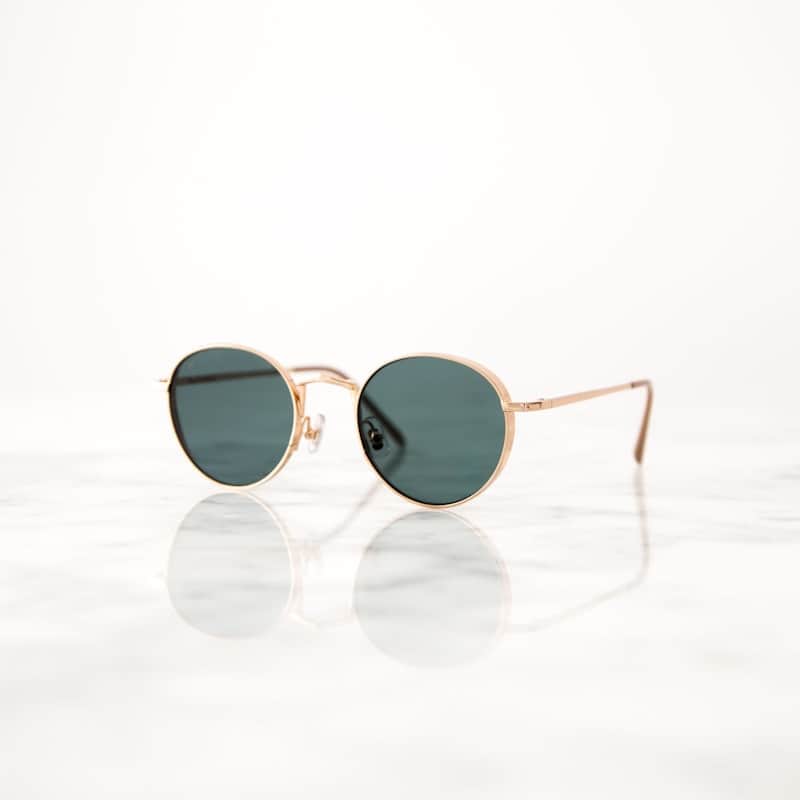
Input: A front-facing selfie in natural light, hair pulled back from the face and temples, neutral expression, no glasses currently worn (the image at the top of this page shows a pair of round gold-frame sunglasses as an illustration, not an example upload).
- Rectangular frames45%
- Geometric frames30%
- Cat-eye frames25%
Face shape: Round
Your cheekbones and jawline sit close in width, with a face length only slightly longer than it is wide and a softly curved jawline. That combination reads as a round face shape.
Frame shapes to try
Angular frames add the definition a round face is missing on its own. Rectangular and square frames with sharp corners work well, and geometric or slightly cat-eye shapes can lift the upper face without looking harsh.
Frame shapes to avoid
Round or oval lens shapes tend to echo your face's own curves rather than balancing them, which can make cheeks look fuller than they are.
Sizing notes
Look for a frame width close to your face width at the temples so the glasses don't overhang or pinch, and a bridge that sits flush without leaving a gap or pressing into your nose.
How it works
- 1
Upload a clear, front-facing photo
Pull hair away from your forehead and temples so the model can see the full outline of your face, not just the center.
- 2
The model reads your face shape
It compares forehead, cheekbone, and jaw width against your face length to sort your proportions into oval, round, square, heart, diamond, oblong, or triangle.
- 3
It matches frame shapes to your proportions
Round faces generally read well in angular frames, square faces in rounder ones, and so on. The result explains which shapes balance your specific proportions.
- 4
You get frame styles and rough sizing
Beyond the shape name, you get style suggestions (round, square, cat-eye, aviator, and similar) plus general guidance on frame width and bridge fit for your face.
Use cases
Shopping for glasses online
Filter frame listings by shape instead of clicking through dozens of product photos hoping one looks right on your own face.
Choosing frames before an eye exam
Walk into the optician already knowing which shapes to try on first, which speeds up the fitting instead of starting from scratch.
Replacing a pair you're not happy with
If your current glasses have never quite looked right, use the analysis to see whether the shape or size is the actual mismatch.
Buying glasses as a gift
Use a clear front-facing photo of the person you're shopping for to narrow the options instead of guessing their size and shape.
Deciding between sunglasses styles
The same face-shape logic applies to sunglasses. Ask in the details box if you want sun-specific style suggestions.
Tips for better results
- Pull hair back from your forehead, temples, and jaw so the full outline of your face is visible.
- Face the camera straight on rather than tilting your chin, which can distort the width and length the model reads.
- Take off any glasses you're currently wearing before the photo so they don't hide your natural proportions.
- Mention your current frame size or a style you like in the details box for more specific comparisons.
- Use even lighting and a plain background so shadows don't obscure your jawline or cheekbone edges.
Frequently asked questions
Can it tell me my actual frame size in millimeters?
No. It gives general guidance on relative width and bridge fit based on your face proportions, not exact millimeter measurements, which still need an in-person or optician fitting.
Does it work if I'm currently wearing glasses in the photo?
It works better without them, since frames can hide the forehead and cheek proportions the model needs to read your face shape accurately.
What if my face shape is between two categories?
Many faces sit between categories. The result explains the specific proportions it saw so you can weigh suggestions from both nearby shapes.
Can I ask it about a specific frame style I already like?
Yes, mention it in the details box and the analysis will address whether that style suits your proportions alongside its own suggestions.
Does it recommend lens color or coatings?
No. It focuses on frame shape, style, and rough sizing based on your face, not lens tints, coatings, or prescriptions.
Plans start at $9 a month. See pricing