Crop Identifier
Walk into a field, snap a photo, and find out what's actually growing there.
What the Crop Identifier does
You're standing in someone else's field, or your own, and you want a name for what's growing before you ask around. From a photo of the plant, leaves, or stalks, the AI works out which crop it most likely is, wheat, corn, rice, soybeans, and dozens of others, along with the growth stage it appears to be in. It's built for anyone who needs a quick read without waiting on an agronomist: land buyers, gardeners, students, or curious travelers passing a field. You get back the most likely crop with a score, a couple of runner-up possibilities, and background on how that crop is typically grown and used.
See a sample result
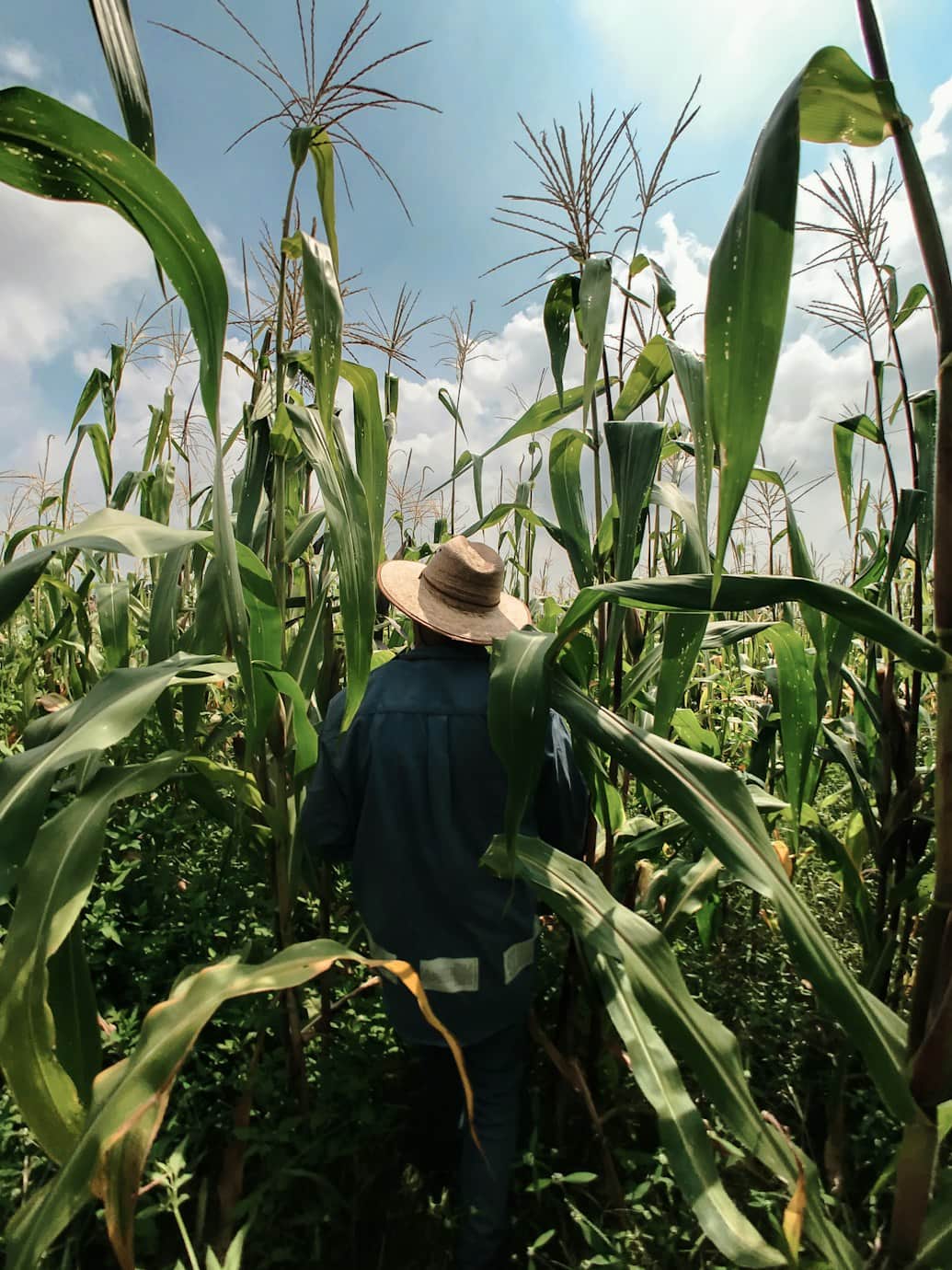
Input: A photo shot from behind a person in a straw hat and dark shirt, walking through a dense field of tall green stalks topped with wispy tan tassels, set against a bright blue sky with scattered clouds.
- Corn (maize)82%
- Sorghum11%
- Sugarcane7%
Most likely crop: Corn / maize (82%)
The tall, upright stalks with broad strap-shaped leaves and the wispy tan tassels branching from the top of each plant are a strong match for maize at the tasseling stage, when the plant has finished most of its vertical growth and is starting to produce pollen.
Other possibilities
Sorghum (11%): from a distance, sorghum's tall stalks and grassy leaves can look similar, though its seed head forms as a dense cluster rather than the branching tassel seen here.
Sugarcane (7%): also grows tall with long blade-like leaves, but typically lacks the tassel structure visible at the top of these plants.
Growth stage: The plants appear to be in the tasseling to early reproductive stage, based on stalk height and the visible tassels, roughly two to three months into the growing season for a typical corn crop.
What to check next: Look at the ears lower on the stalk. If silks are showing and starting to brown, the crop is moving toward maturity; if the field still looks entirely green with no visible ears, it has more growing left before harvest.
How it works
- 1
Upload a clear photo of the plant or field
Get close enough to show leaf shape, stalk structure, and any seed heads or pods. A wider shot of the whole row helps too, since spacing and height are useful clues.
- 2
The AI compares visible traits against known crops
It reads leaf shape, color, height, and any visible seed heads or flowering, then weighs those against the traits typical of common field crops.
- 3
Add notes in the details box if you have them
Mention the region, the season, or anything you already suspect. That context narrows down which crops are realistically being grown there.
- 4
Get a scored identification with growing context
You'll see the most likely crop with a score, other possible matches, the growth stage it looks to be in, and general notes on how that crop is cultivated and used.
Use cases
Scouting a field you don't recognize
Whether you're driving past farmland or walking your own property line, get a quick read on what's actually planted before you go ask a neighbor.
Coursework and agricultural study
Students learning crop identification can check a field photo against the tool's read as a study aid, then verify against a textbook or instructor.
Evaluating land before a purchase
If you're looking at farmland and want a first impression of what's currently growing on it, a photo gives you a starting point before a formal appraisal.
Hobby farmers and gardeners
New to growing your own food? Confirm that the seedlings coming up in a community plot or a neighbor's garden match what was supposed to be planted.
Travel curiosity
Passing farmland in an unfamiliar region and wondering what's grown there? A photo turns idle curiosity into an actual answer with some agricultural context.
Tips for better results
- Get close enough to show individual leaves and stalks clearly, not just a distant field shot.
- Include the whole plant when you can, base to tip, since height and structure matter as much as leaf shape.
- Photograph in daylight. Shadows and low light make leaf color and texture harder to read accurately.
- Mention the region and rough season in the details box; the same leaf shape can belong to different crops depending on where and when it's growing.
- If a field has multiple crops planted side by side, photograph each one separately rather than framing them together.
Limitations
This is a visual estimate, not a lab test or a soil analysis. It compares what's visible in your photo, leaf shape, color, height, seed structure, against traits typical of common crops, so young seedlings, damaged plants, or unusual varieties can be harder to pin down and more likely to get confused with a similar-looking species. It also can't detect pests, disease, or nutrient issues unless they're clearly visible in the frame; for anything that affects a real harvest decision, confirm with a local agronomist or extension office.
Frequently asked questions
Can it identify a crop from just the seeds or grain, not the growing plant?
It's built around photos of the growing plant, leaves, and stalks. A photo of harvested seeds or grain alone gives it much less to work with and will likely produce a lower-confidence guess.
Does it work on young seedlings?
It can try, but seedlings of many crops look similar before their distinctive leaf shapes and stalks develop, so expect lower scores and more runner-up possibilities at that stage.
Can it tell me if my crop has a disease?
It will note anything obviously visible, like discoloration or wilting, but identifying and treating plant disease is a different job. For that, a dedicated plant disease tool or an agronomist is the better resource.
Will it recognize less common or regional crops?
It covers a wide range of field crops, but very regional or less widely grown varieties may return a lower-confidence match or get grouped with a more common relative.
How accurate is the crop identification?
It's a visual estimate based on how closely your photo matches known crop traits, not a certainty. Clear, close, well-lit photos with location and season notes produce the most reliable reads.
Can it identify weeds mixed in with a crop?
It focuses on identifying the main crop in frame rather than cataloging every plant present. If a weed dominates the photo, it may be identified as the primary subject instead.
Plans start at $9 a month. See pricing