Meme Explainer
Upload a meme screenshot and get its origin, format, and the joke spelled out in plain language.
What the Meme Explainer does
Someone sends a meme in a group chat and everyone reacts except you, because the joke depends on a format or reference you've never seen. Upload a screenshot and you get a breakdown of what's actually going on: the template it's built on, where that template came from, what the caption is riffing on, and why the combination is supposed to land as funny. It's aimed at anyone scrolling a feed full of inside jokes they're not in on, or a parent, teacher, or coworker trying to keep up with what younger relatives or students are sharing.
See a sample result
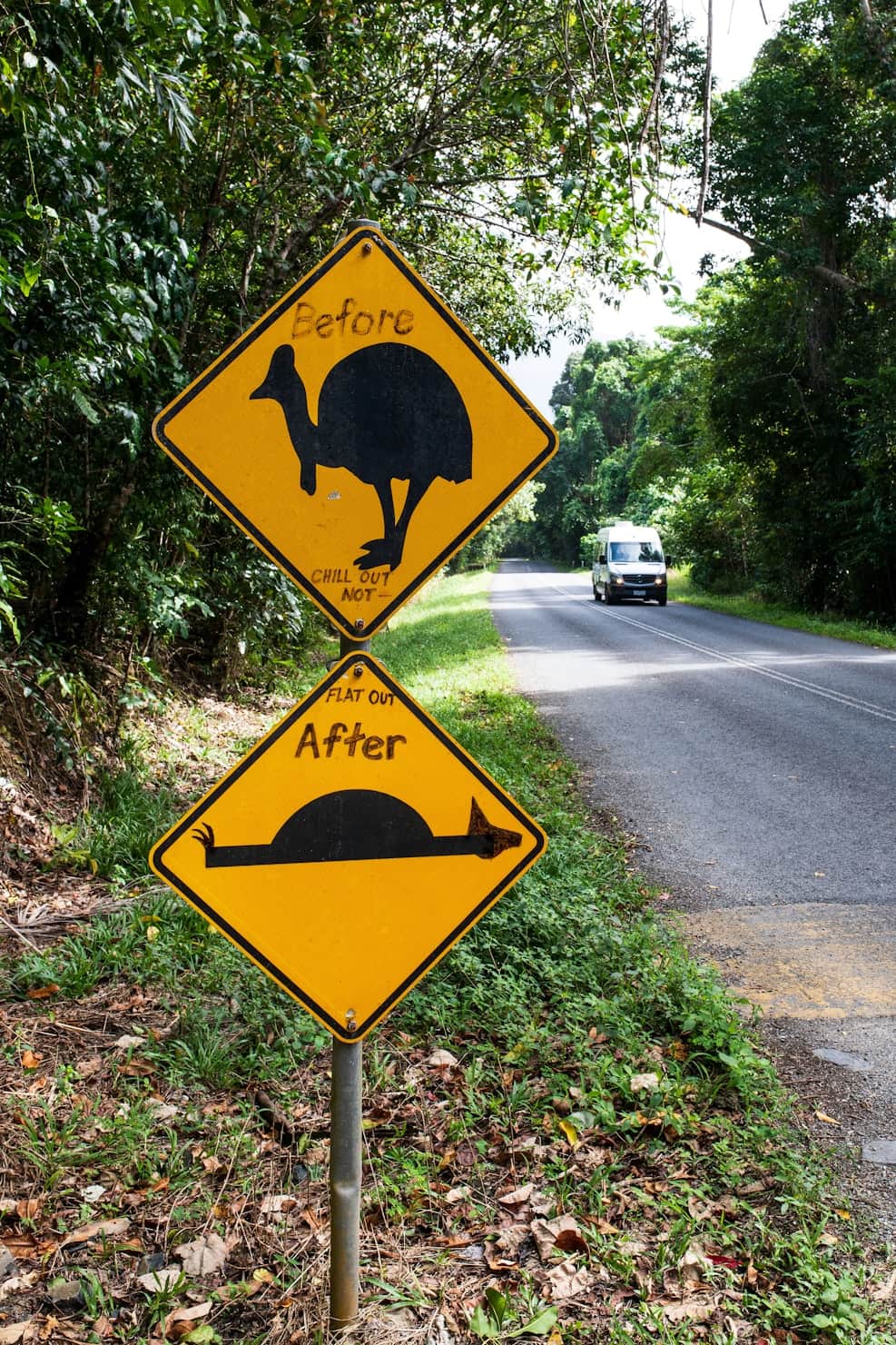
Input: A photo of two yellow diamond-shaped warning signs stacked on one post beside a rainforest road, with a white van in the distance. The top sign shows a cassowary standing upright under the painted word "Before", with small text "CHILL OUT NOT" at the bottom. The lower sign has small text "FLAT OUT" at the top, the word "After", and the same bird drawn flattened on the ground.
Format: Not an internet meme template. It's a photo of real roadside signage that gets shared because it works like a joke, the same way deadpan warning labels and blunt public notices do.
The joke: The two signs borrow the "before and after" layout from fitness and makeover posts. "Before" is a cassowary (a large flightless bird of the far north Queensland rainforest, often killed by cars) standing upright. "After" is the same bird flattened on the road. The cheerful makeover format applied to roadkill is the punchline.
Reading the text: the small print runs across both signs as one sentence: "Chill out, not flat out." In Australian slang, "flat out" means driving as fast as you can, so the message is "drive relaxed, not at full speed." It doubles as a pun, since speeding leaves the bird literally flat.
Why it spreads: official-looking road safety messaging with gallows humor is a reliable shareable shape online, and cassowary crossing signs are already a tourist photo spot in the region.
Who gets it fastest: Australians, who know both the slang and the bird. Everyone else gets the before-and-after gag, but can miss the "flat out" double meaning. Whether the painted words are part of the official sign or a local addition isn't something the photo can confirm.
How it works
- 1
Upload a screenshot of the meme
A clean screenshot with the full image and any caption text visible gives the model the most to work with. Cropped or blurry text makes captions harder to read accurately.
- 2
Add context in the details box if you have it
If you know where you saw it (a specific subreddit, a friend's story, a group chat) or have a guess at what's being referenced, note it. That steers the explanation toward the right community or trend.
- 3
The model reads the image and any text
It identifies the base image or format, reads the caption, and separates what's a recognizable template from what's a fresh joke layered on top of it.
- 4
Get a plain-language breakdown
The result names the format, gives the origin story if the format has a known one, explains the joke's logic, and flags anything that reads as a variation or remix of an older meme.
Use cases
Catching up on a group chat
Get the joke behind a meme a friend sent before you reply, instead of guessing at a reaction or asking them to explain it themselves.
Parents and teachers keeping up
Understand what a kid or student is actually referencing when they share something, without needing to already know the format or the community it came from.
Researching a trend for work
Content creators, marketers, and community managers can get a quick read on a format's origin and current usage before referencing it in their own posts.
Learning internet history
Trace a meme format back to its first appearance and see how it's mutated since, useful for anyone curious about how a joke evolved over months or years.
Tips for better results
- Screenshot the whole image, including any caption text above or below it, rather than cropping tightly.
- Mention where you saw the meme if you remember, since the same image can carry different jokes in different communities.
- Add a specific question in the details box, like "why is this funny" or "where did this format start," to focus the answer.
- Try a second screenshot with more surrounding context (the full post, not just the image) if the first explanation feels incomplete.
- Expect the model to describe cultural context rather than confirm exact dates or view counts, since it isn't pulling live data from meme databases.
Limitations
This is a visual and contextual read based on what the AI recognizes and infers, not a lookup against a meme encyclopedia or a database of first-appearance dates. Well-known formats get accurate, detailed histories; obscure, brand-new, or region-specific memes may get a more general explanation based on visual cues alone. Treat dates, origin claims, and "who made this first" details as a reasonable estimate rather than a verified fact, and check a source like Know Your Meme if precision matters.
Frequently asked questions
Can it explain memes that are just text, with no image?
It works best with an image, since most memes rely on a visual format. A screenshot of a text-only post still gets read, but the explanation leans more on the wording than on template recognition.
Will it tell me exactly when a meme format started?
For well-documented formats it can give a reasonable origin story, but it isn't pulling from a live meme database, so treat specific dates as approximate rather than confirmed.
What if the meme references something offensive or controversial?
The explanation covers what the joke is doing and why it spread, including noting when a format has drawn criticism or backlash, without endorsing the content itself.
Can I ask it to explain just one part of a meme, like a caption?
Yes, use the details box to point at the specific line or element you don't understand, and the explanation will focus there instead of covering the whole image generically.
Does it work on memes in other languages?
It can read text in other languages and explain the joke, though very region-specific slang or wordplay may come through more clearly if you add a translation or note in the details box.
Why does the explanation mention a format I've never heard of?
Many memes remix an older, well-known template with a new caption. The explanation names both the underlying format and the fresh joke layered on top so you understand the reference and the punchline.
Plans start at $9 a month. See pricing