AI Facial Expression Analyzer
Upload a face photo and get a written breakdown of the expression it shows.
What the Facial Expression Analyzer does
A raised eyebrow, a half-smile, eyes that look tense rather than happy: expressions carry a lot of information that's easy to misread in a single frame. This tool looks at a face photo and describes what the expression suggests, which muscles seem involved, and how strong or mixed the emotion appears. It's built for actors and photographers checking a headshot, people curious about a candid photo, and anyone comparing takes from a shoot to see which one reads the way they intended. Add a note in the details box (say what emotion you were going for) and the analysis will speak to that directly. You get one written result per photo, plus scores across a set of common expressions.
See a sample result
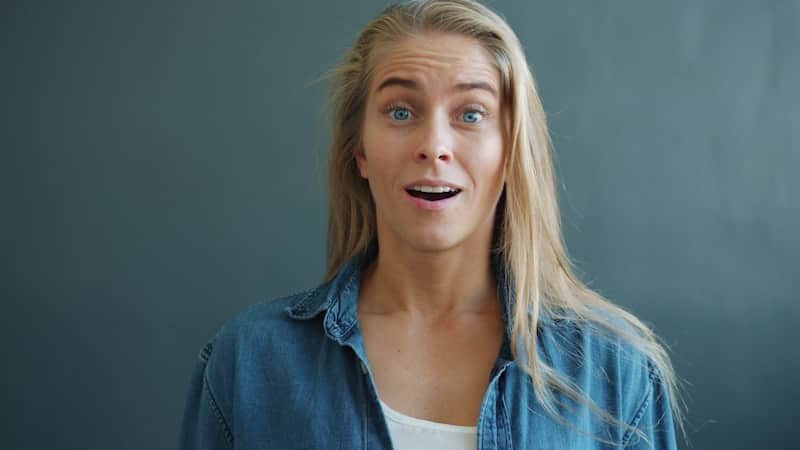
Input: A woman with long blonde hair photographed head-on against a plain gray background, wearing a denim shirt over a white top. Her eyebrows are raised, her eyes are wide, and her mouth is open in a small oval with the upper teeth showing.
- Surprise78%
- Happiness34%
- Fear12%
- Neutral6%
Primary expression: Surprise
The eyebrows are lifted well above a relaxed resting position, a classic surprise marker, though the forehead stays fairly smooth. The eyes are opened wider than a neutral face would show, and the mouth is open in a small oval rather than pulled into a smile shape, which points away from happiness as the main read.
There's a secondary trace of positive affect: the cheeks aren't tensed the way they would be in fear or shock, and the mouth corners sit level rather than pulled down. That combination reads as pleasant surprise, closer to "you won't believe this" than "that startled me."
Muscle cues: raised inner and outer eyebrows, widened eyelids, lips parted in an oval with the jaw slightly lowered, relaxed cheeks. No visible tension around the nose or lower eyelid that would suggest disgust or anger blended in.
Expressions can also be posed for a photo rather than spontaneous, so treat this as a read of what the face is doing in the frame, not proof of what the person actually felt at that moment.
How it works
- 1
Upload a clear, front-facing photo
One face, decent light, and the eyes and mouth both visible works best. Side angles, sunglasses, or a hand covering the chin make it harder to read specific muscle movement.
- 2
Add context if you have it
Use the details box to say what the moment was (a stage direction, a candid at a party, a self-portrait) or ask a specific question, like whether the smile looks forced.
- 3
The AI reads the face
It looks at eyebrow position, eye openness, mouth shape, and overall muscle tension to estimate which named emotion or blend of emotions the expression most resembles.
- 4
Get a written breakdown with scores
The result names the primary expression, calls out any secondary or mixed signals, and scores how strongly the image matches emotions like happiness, surprise, or neutral.
Use cases
Checking headshots and audition photos
Actors and models often shoot several expressions in one session. Run each frame through the tool to see which one actually reads as the emotion the brief called for.
Reviewing candid event or wedding photos
If a photographer wants to sort through candids for the ones that show genuine reactions rather than posed smiles, the breakdown of muscle tension can help flag which shots look natural.
Studying expressions for animation or illustration reference
Animators and character artists can use the write-up as a reference for which facial features to exaggerate when drawing a specific emotion.
Practicing expression control on camera
If you're working on your on-camera presence, uploading test frames and comparing the scores against the expression you were aiming for gives you concrete feedback instead of just guessing.
Tips for better results
- Use a photo where both eyebrows and the full mouth are visible; cropped or angled faces reduce accuracy.
- Avoid heavy filters or beauty smoothing, since they can flatten the small muscle movements the analysis relies on.
- If the face is mid-motion (laughing, mid-sentence), expect the read to reflect that exact split second, not the whole moment.
- Mention the situation in the details box if you want the analysis to consider context, like a performance versus a private photo.
- Try a few frames from the same burst; expressions can shift by fractions of a second and the scores will move with them.
Limitations
This is a visual estimate of what a facial expression looks like in one still photo, not a measurement of what someone actually felt. The same muscle movements can come from genuine emotion, acting, a reflex, or even a camera catching an awkward mid-word moment. Expression reading also varies across cultures and individuals, and lighting, camera angle, or partial occlusion can all shift the result. Don't use this to judge someone's honesty, mental state, or intentions.
Frequently asked questions
Can it tell if a smile is genuine or forced?
It can point out cues associated with each, like whether the muscles around the eyes are engaged alongside the mouth, but it's reading a still image, not verifying sincerity, so treat it as one input rather than a verdict.
Does it work on drawings, avatars, or anime faces?
It's built for photographic faces. Illustrated or stylized faces exaggerate features differently, so the muscle-based read may not translate well.
Can I upload a photo with more than one person?
You can, but a group shot gives each face less attention and the result may blend or skip people. For a clean read on each person, crop and run separate photos, one per run.
Why did it score more than one emotion?
Real expressions are often blends. A face can show surprise and happiness together, or tension with a forced smile, and the scores reflect how strongly the image matches each one rather than forcing a single label.
Will it recognize the specific person in the photo?
No. It looks only at expression cues in the face, not identity, and doesn't attempt to match the photo to anyone.
How many photos can I analyze per run?
One photo per run. Upload a new image for each expression you want a separate breakdown of.
Plans start at $9 a month. See pricing