How Old Is This Photo?
Upload an old photograph and get a read on the decade, style, and clues that point there.
What the Vintage Photo Analyzer does
A box of family photos turns up with no dates written on the back, just faces, clothes, and a beach or a living room you don't recognize. This tool looks at the details a historian would: hairstyles, clothing cuts, photo format and print type, cars, furniture, and any visible signage, then narrows the likely decade and explains what led there. It also reads the photograph itself, since a daguerreotype, a Polaroid, and a scanned negative each carry their own tells. You get a plain answer on the probable era along with the specific visual clues, so you're not just told a decade, you're shown why.
See a sample result
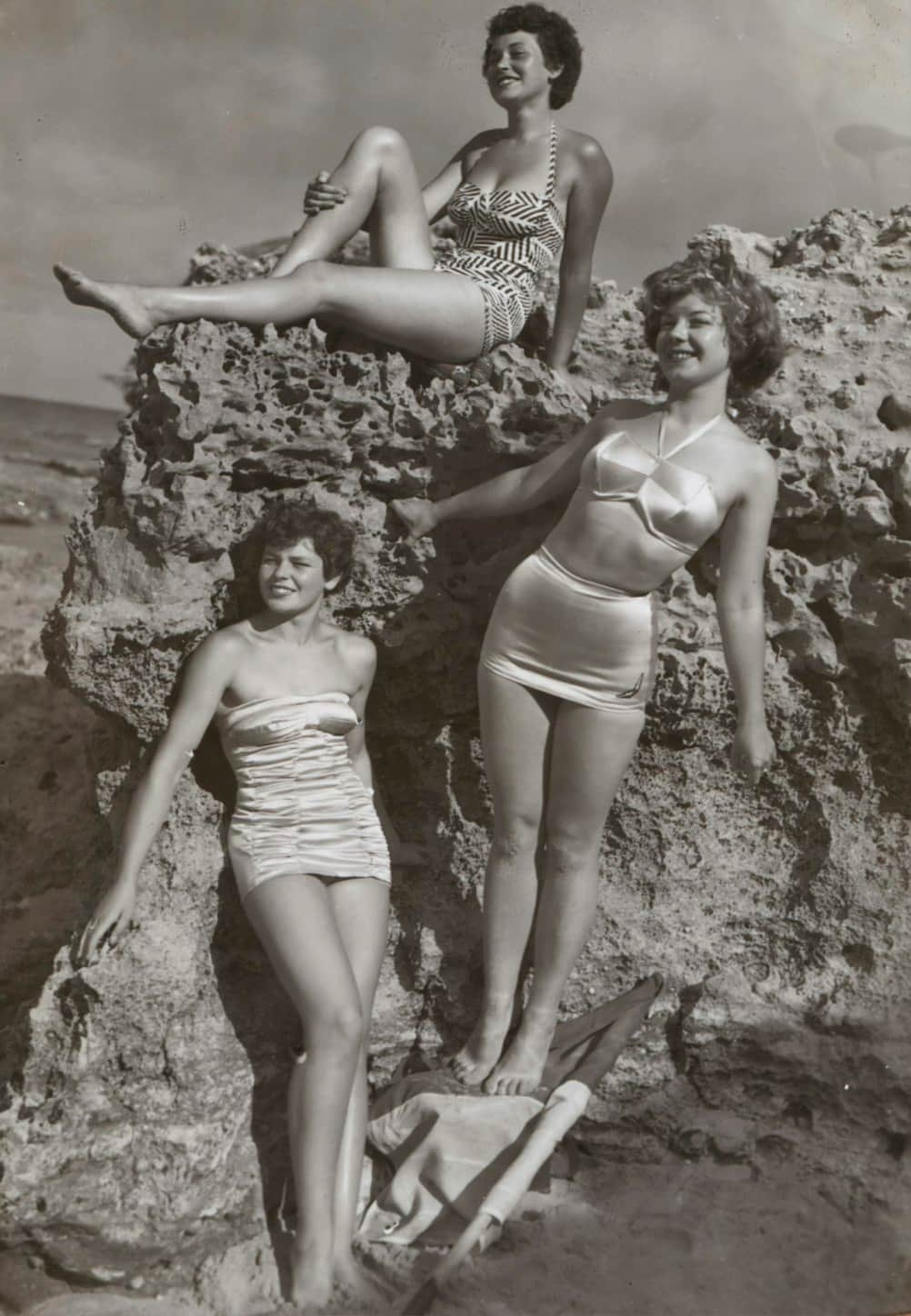
Input: A black and white photo of three young women posed on a rocky outcrop at a beach. One sits at the top wearing a striped one-piece swimsuit with a halter neckline. On the right, one woman stands in a satin halter bra top and matching high-waisted bottoms, and at lower left another leans against the rock in a ruched, strapless satin one-piece. All three have short, voluminous curled hairstyles. The print has visible grain, slightly soft focus, and a warm, sepia-toned, aged look.
- 1950s70%
- Late 1940s22%
- Early 1960s8%
Likely era: The 1950s, most likely the early to middle part of the decade, based on the swimwear, hairstyles, and the print's photographic characteristics.
What points there: Shiny satin swimwear, a structured halter bra top with high-waisted bottoms that still cover the navel, and a ruched strapless one-piece are all classic late-1940s to 1950s cuts, before lower-cut bikinis spread in the 1960s. The ruched, sarong-style one-piece on the woman at lower left fits 1950s beachwear especially well. All three women wear short, tightly curled hairstyles close to the head, a look common through the decade before hair began loosening into the bouffant styles of the early 1960s.
Photo format clues: The soft grain, warm tone, and slightly reduced contrast are consistent with a black and white gelatin silver print from a mid-century roll film camera, printed on paper that has aged and picked up a slight sepia cast over time. The tone shift suggests it has spent decades in an album or box rather than in archival storage.
What's less certain: Without a location or family context, the exact year isn't pinpointable, and a late-1940s date can't be ruled out, since these styles were already appearing then.
Preservation note: The fading and sepia shift are signs of age; scan the original at high resolution and store it in an acid-free sleeve away from light.
How it works
- 1
Upload a clear scan or photo of the print
Include the full photo without cropping out edges, borders, or visible print marks, since format details help narrow the era.
- 2
The AI reads fashion, technology, and photo format
It looks at clothing and hairstyles, any vehicles or appliances visible, architectural details, and the photo's print type, tone, and condition.
- 3
Add anything you already know in the details box
A family name, location, or rough guess narrows the range and lets the analysis focus on confirming or refining it.
- 4
Get an estimated decade with the reasoning behind it
The result names the likely time period, points to the specific clues that support it, and flags anything that suggests a different range.
Use cases
Sorting a family photo collection
You inherited boxes of undated prints and want a rough timeline before organizing them into albums or sharing them with relatives.
Researching a found or purchased photo
Estate sales, flea markets, and antique shops turn up photos with no context, and you want a starting point before researching further.
Confirming a family story
A relative says a photo is from a specific event or year, and you want to check whether the visible clues actually support that timeline.
Writing captions for a memoir or archive project
You're building a family history or scrapbook and need a reasonable date range to caption photos that were never labeled.
Genealogy research
Dating a photo by clothing and format can help narrow which generation or branch of a family a mystery photo belongs to.
Tips for better results
- Scan or photograph the entire print, including any border, scalloped edge, or printed date stamp, since these carry real dating clues.
- Photograph the back of the print separately if it has handwriting, a photo lab stamp, or a manufacturer's mark.
- Good, even lighting on the original print reduces glare and keeps fine details like fabric pattern and hair texture readable.
- If you know even an approximate decade or location, add it in the details box to sharpen the estimate.
- For faded or heavily damaged prints, mention the condition so the analysis accounts for altered color and contrast.
Limitations
This is a visual estimate based on style and photographic format, not a verified date. Fashions and photo formats often stayed popular for years, families reused older clothing, and reprints or later copies of an original photo can carry misleading clues. Treat the result as a reasonable range to guide research, not a confirmed date.
Frequently asked questions
How accurate is the decade estimate?
It's a visual estimate based on clothing, hairstyles, and photo format, generally narrowing to a decade or a span of a few years. Exact-year accuracy isn't possible from visual clues alone.
Can it identify the people or location in the photo?
No. It reads style and format clues to estimate an era; it doesn't identify individuals or pinpoint a specific location.
Does it work on color photos, or only black and white?
It works on both. Color photos add clues like film stock characteristics and dye fading patterns that black and white prints don't have.
What if the photo has been reprinted or scanned from a copy?
A reprint can look newer or lose some format clues, so mention it in the details box if you know the print isn't an original.
Can it date very old formats like daguerreotypes or tintypes?
Yes, it recognizes distinct early photographic formats and their typical date ranges, along with more common 20th century print types.
Will damage or fading throw off the estimate?
Some fading and print damage is expected and factored in, but heavy damage that obscures clothing or hairstyle can widen the estimated range.
Plans start at $9 a month. See pricing